
Primary · P1 to P7 · PLE
Primary practice made for young children
P1 to P7 questions built for small hands and young readers: join with a line, put in order and number lines, with hints a child understands.
01
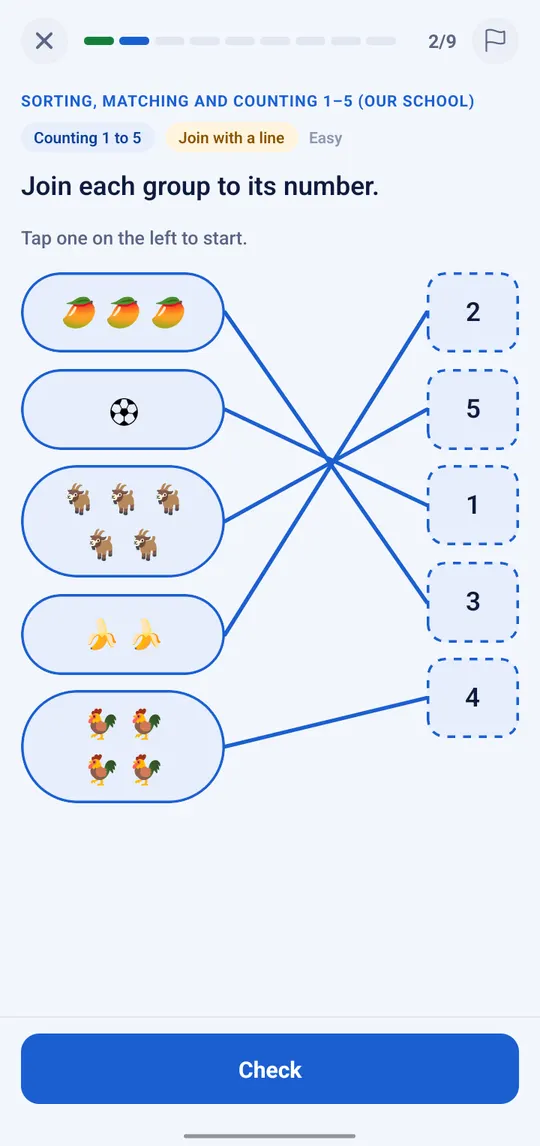
Join with a line
Tap a group on the left, then its partner on the right. Groups sit in ovals, like sets in class, and pictures are spaced so they're easy to count.
Green lines are right and red lines are wrong, so a child sees straight away what to fix.
02
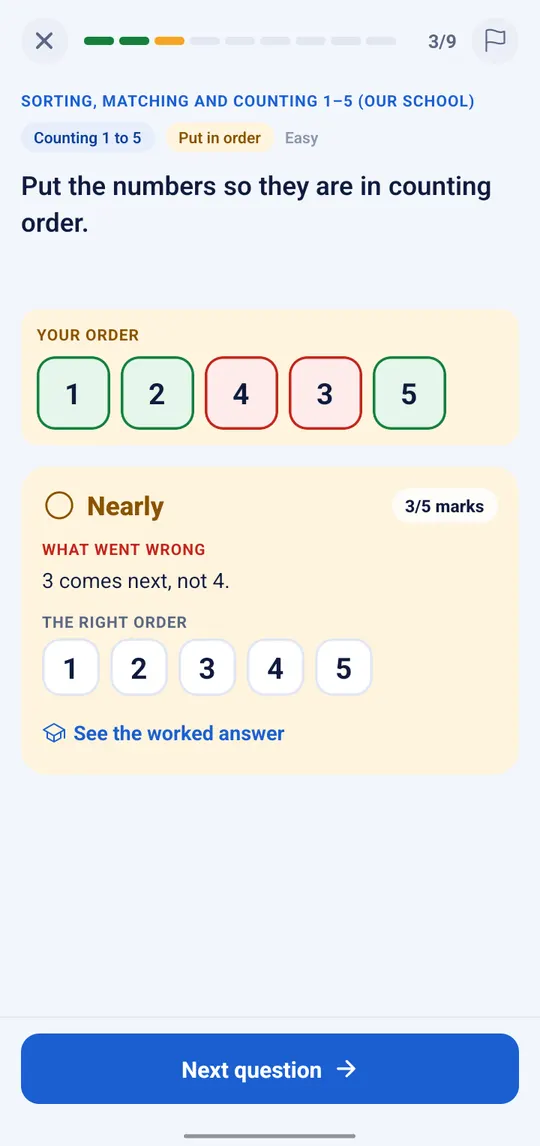
Put in order
Tap the numbers or groups in order. No dragging is needed. A wrong place turns red with a hint such as “3 comes next, not 4”.
03
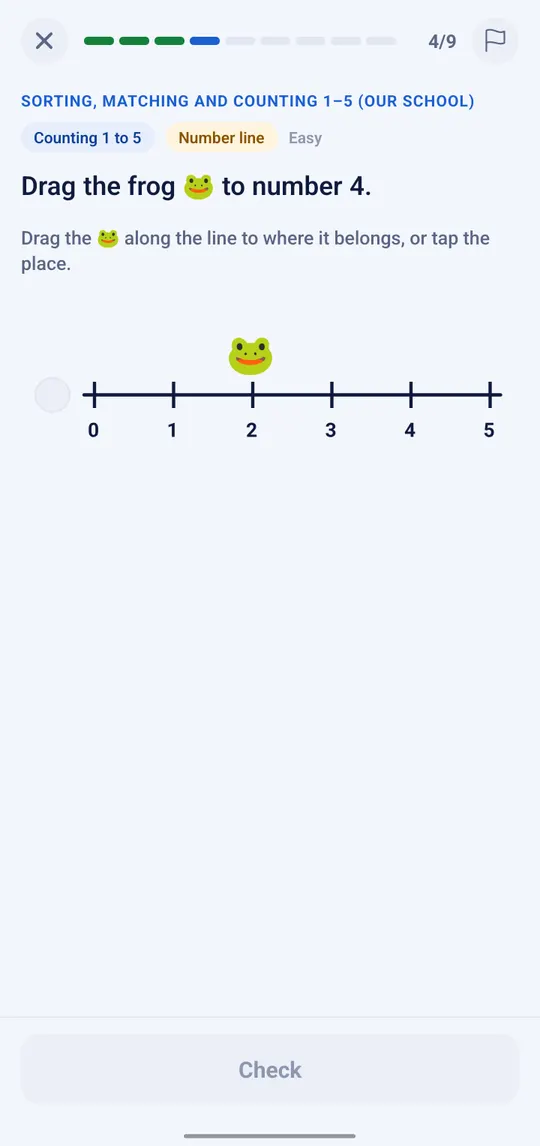
Number lines
Drag the frog to the right number, or tap the place on the line. Hints suit young children, for example “Count on from 3 until you reach 5”.
Older pupils write their working too
Upper primary maths uses the same blank page and line-by-line marking as secondary school, so pupils get used to showing their working before PLE. Primary pupils should be signed up by a parent or guardian, using the parent's phone number. See how it works for parents.
Start with 5 free exercises
New students get 5 free exercises, and one more free exercise every day.
Get the Elaarn appScreens are from the Android app with test accounts. The app keeps improving, so yours may look a little different.